Query Tahoe’s frontier-scale datasets from your AI agent.
Available today: Tahoe-100M, a 100-million-cell perturbation atlas. Ask in plain language for expression and differential expression, pathway scores, phenotype readouts, embedding distances, perturbation markers and drug and cell-line annotations, or run guarded read-only SQL — no downloads, just one install and a GitHub sign‑in.
Paste it into your AI agent to install Tara.
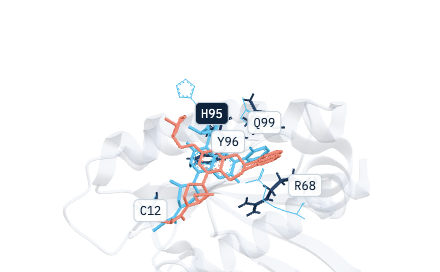
One install, then sign in with GitHub.
You'll be asked to sign in with GitHub. If tools don't appear, restart your session.
Ask your agent
Paste this into your agent:
Install the Tahoe plugin: add the marketplace tahoebio/tahoe-public-plugins, install the tara plugin, then sign me in with GitHub.Claude Code
In Claude Code:
claude plugin marketplace add tahoebio/tahoe-public-plugins
claude plugin install tara@tahoe-publicCodex
In Codex:
codex plugin marketplace add tahoebio/tahoe-public-plugins
codex plugin add tara@tahoe-publicAdvanced
Connect the server directly, without the plugin:
claude mcp add --transport http --scope user tahoe-public https://tara.tahoebio.io/mcpcodex mcp add tahoe-public --url https://tara.tahoebio.io/mcpAsk the open-ended question. Get the analysis back.
Tara works alongside the other tools in your agent, so a question about Tahoe’s data can end in a dashboard or a write-up, not just a number.
-
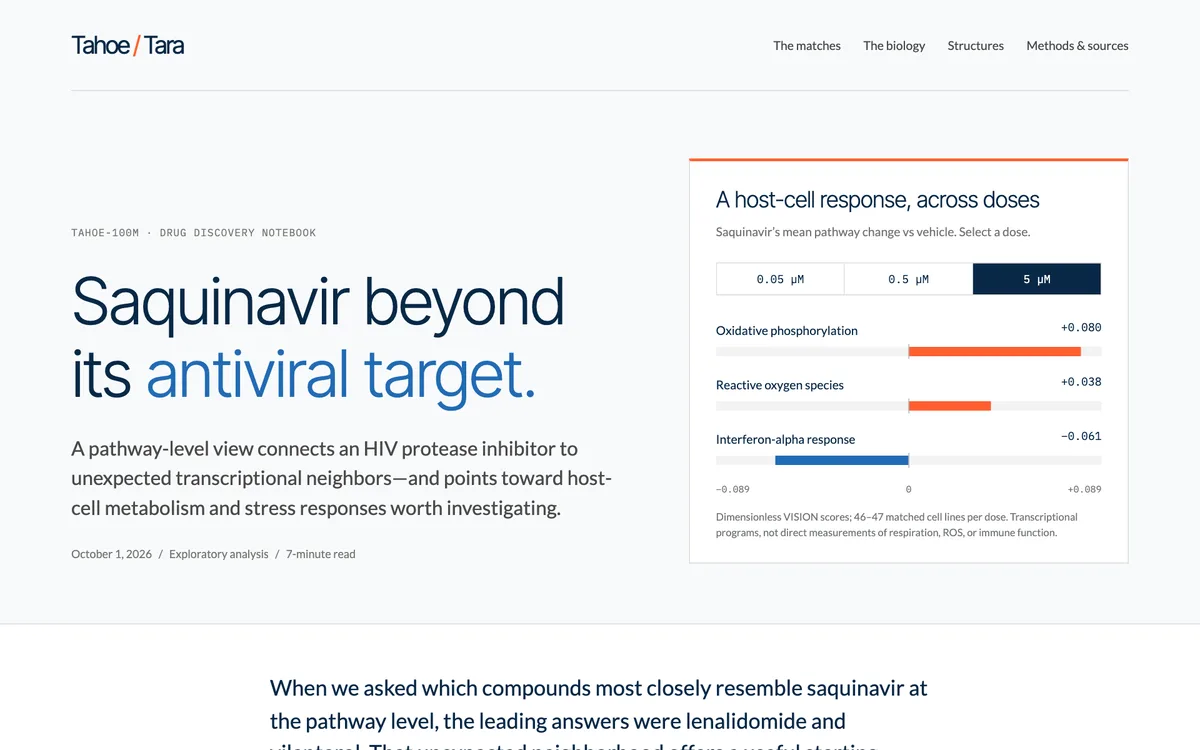
Written report · Claude Code
Saquinavir beyond its antiviral target
Which compounds respond most like saquinavir across 50 Hallmark pathways, and why.
-
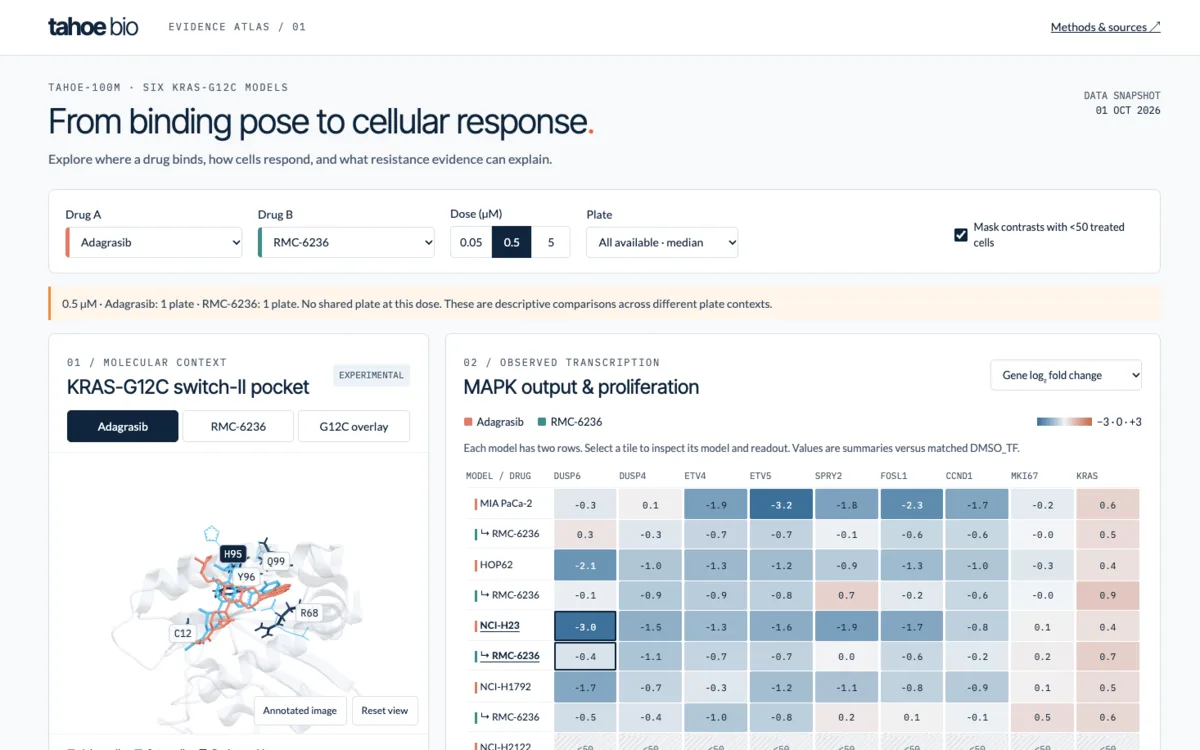
Interactive dashboard · Codex
From binding pose to cellular response
Adagrasib and sotorasib across six KRAS-G12C models, with binding poses from Boltz.
-
Quick answer · Cursor
Does binimetinib down-regulate KRAS signaling?
Yes: negative at every dose, in 46 of the 50 cell lines.
What you get
list_releasesThe dataset release this service serves. Call this first.
search_conditionsFind conditions — drug, dose and cell line — in the index.
resolve_genesResolve gene symbols and Ensembl ids; exact, ambiguous or not_found, never a guess.
list_cell_linesThe cell lines: Cellosaurus id, name, DepMap id, organ and driver annotations.
get_drug_infoDrug annotations: targets, mechanism class, approval status; filter by drug, moa or target.
get_expression_slicePseudobulk expression for genes × conditions, with matched controls and the release and request it answered.
get_differential_expressionDrug-versus-vehicle differential expression per contrast, with the release and request it answered.
get_perturbation_markersThe genes a classifier found most important for one drug × cell line condition.
search_gene_setsFind gene sets (pathways) by name or collection, to pass to get_pathway_scores.
get_pathway_scoresDifferential VISION pathway scores per drug × cell line, with the release and request it answered.
get_phenotype_scoresSurvival, cell-cycle, heterogeneity and separability readouts for drugs × cell lines.
get_embedding_distanceHow far a drug moves a cell line's state from vehicle, in the release's embedding space.
run_sqlRead-only SQL over the approved tables, guarded and cost-bounded; the exact SQL is returned.
get_guideHow to analyse and interpret the data: controls, units, coverage traps.
healthLiveness, the served release, and the response contract version.